
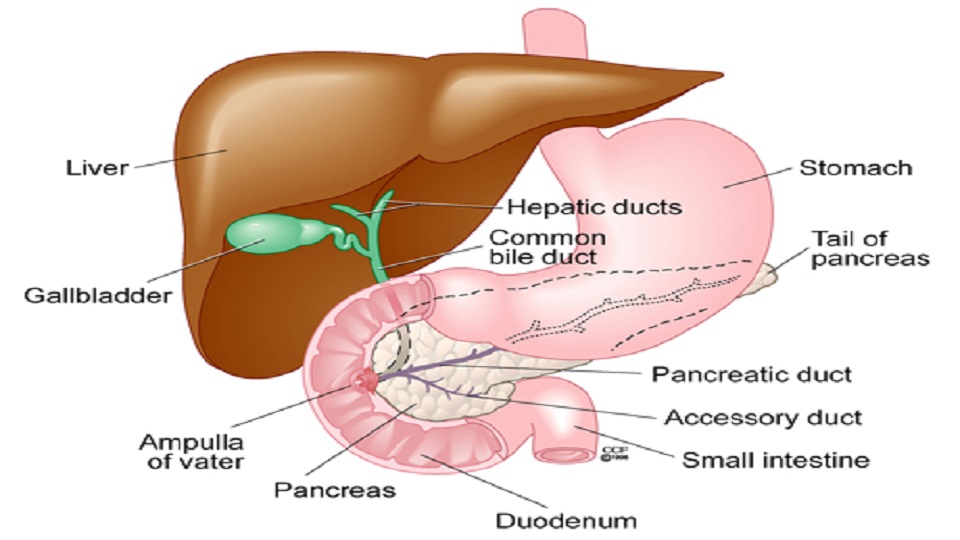
Gastrointestinal and hepato-pancreatico-biliary cancers include the cancers of the gastrointestinal tract like esophagus, stomach, duodenum, small bowel, colon and rectum. The hepato-pancreatico-biliary cancers include the cancers of the liver, bile duct, gallbladder and pancreas. This article will highlight the presentation, early detection, diagnostic and staging modalities and treatment options for these cancers in general, and also explain why you need to visit a specialist for these cancers.
How Do These Cancers Present?
Most of these cancers in our country are detected at an advanced stage, i.e. stage 3 and 4. Stage 3 implies that the spread is loco-regional — for example, to the nearby lymph nodes or adjacent organs — whereas in stage 4 disease the cancer spreads to distant organs, for example stomach cancer spreading to the liver, lungs, peritoneum or distant lymph nodes. The symptoms vary depending on the organ involved by the cancer and the extent of involvement of the organ — for example, an early-stage cancer of the stomach would present with minimal symptoms, whereas an advanced cancer usually presents with pain, vomiting, weight loss and decreased appetite.
Detection of these cancers at an early stage can result in an improvement in cure rates — which is why awareness of red-flag symptoms among the public and general practitioners matters so much.
Is Early Detection of These Cancers Possible?
Detection of these cancers at an early stage can result in an improvement in cure rates. There needs to be a lot of emphasis on awareness regarding the red-flag or warning symptoms amongst the public as well as general healthcare practitioners, who are the first point of contact in most parts of our country. This can help patients seek timely consultation and help general practitioners refer patients to the concerned specialist at the earliest. Similarly, screening programs are helpful in early detection. The main limitation of these programs is their cost-effectiveness, and hence their implementation in a vast country like ours is challenging. However, screening programs can be selectively implemented using simple screening methods in regions with a high incidence of a particular type of cancer specific to that region.
How Are These Cancers Diagnosed?
The modality chosen for the diagnosis of gastrointestinal cancers depends on the site involved by the cancer.
Endoscopy with Biopsy
Diagnosis of cancers involving the esophagus, stomach, duodenum, colon and rectum is done using endoscopy and biopsy from the growth.
Ultrasound-Based Imaging
Ultrasound of the abdomen by an experienced radiologist is the initial investigation, and can detect or suspect cancers of the gallbladder, liver, pancreas and bile duct.
How Are These Cancers Staged?
Cancer staging done before starting treatment is also called clinical staging. This is essential to formulating the treatment plan and helps in prognostication. Commonly used staging investigations include CT scan, MRI, PET scan, etc. However, the staging investigations are determined by the tumor site and type. For example, staging investigations for a stomach adenocarcinoma include a CT scan of the chest, abdomen and pelvis — whereas a Ga-DOTANOC PET scan is essential to stage a neuroendocrine tumor of the stomach.
Is Tissue Diagnosis or Biopsy Required in All Cases?
A tissue diagnosis should be obtained whenever it is possible, in the form of biopsy, cytology or cell block. Tissue diagnosis is important:
- Before the start of cancer-directed therapy like chemotherapy and/or radiotherapy
- To know the type of tumor, because the treatment varies with the cancer type — i.e. to differentiate between a lymphoma, adenocarcinoma or other tumors
- When a biopsy can alter the plan and intent of management, e.g. obtaining tissue from a suspicious liver lesion in carcinoma of the stomach
- To differentiate some cancerous conditions from conditions which mimic cancer, like tuberculosis or sarcoidosis
Tissue diagnosis is not, however, mandatory in some situations — for example, when a negative biopsy will not alter the plan, such as a radiologically convincing pancreatic or gall-bladder mass that is resectable on imaging and the patient is fit for surgery. Introducing a biopsy needle in such a situation also has a potential for tumor spread (approximately 1%) along the needle tract.
How Are These Cancers Treated?
The treatment of these cancers depends on the clinical stage, tumor type, the patient's overall performance status, associated medical problems, and patient preference.
- Stage I: In most early-stage cancers, surgery is the treatment of choice.
- Stages II–III: For higher-stage cancers with limited spread, a combined treatment with different modalities — chemotherapy, radiotherapy and surgery — ensures better outcomes compared to a single-modality approach.
- Stage IV: The intent of treatment is mainly palliative in the majority of cases. However, in select cases — for example some colorectal or neuroendocrine cancers — multimodality treatment followed by surgery can still result in cure.
Whom to Consult for Treatment of Gastrointestinal Cancers?
The management of these cancers is complex. Treatment is best delivered by a team of clinicians who are exclusively trained and experienced in their respective fields. In today's day and age, oncology is moving towards organ-based specialisation and practice, and this has been shown to improve clinical outcomes. It is therefore preferable to consult clinicians with exclusive training and expertise in managing gastrointestinal cancers.
- MBBS, MS, DNB Gastrointestinal Surgery (Sir Ganga Ram Hospital)
- Postdoctoral (HBNI) fellowship in GI & HPB Oncology from Tata Memorial Hospital, Mumbai
- Focused specifically on GI and HPB cancers, from diagnosis through surgery and coordinated multimodality care
Have Questions About a GI or HPB Diagnosis?
Book a consultation with Dr. Abhishek Mitra for specialist guidance.

Dr. Abhishek Mitra
Gastrointestinal & HPB Surgical Oncologist
Senior Consultant with a postdoctoral (HBNI) fellowship from Tata Memorial Hospital, Mumbai, specialising in GI & HPB cancers and minimally invasive surgery.
View Full Profile